Smart PID
PID Control: Understanding, Optimization, and Runtime Benefits
What is PID?
PID stands for Proportional-Integral-Derivative, and it's a control loop mechanism widely used in industrial control systems and other applications requiring continuously modulated control. The PID controller continuously calculates an error value as the difference between a desired setpoint and a measured process variable, then applies a correction based on proportional, integral, and derivative terms.
The Parameters: P, I, D
- Proportional (P):
- The proportional term produces an output value that is proportional to the current error value.
- A high proportional gain results in a large change in the output for a given change in the error.
- If the proportional gain is too high, the system may become unstable. In contrast, a small gain results in a small output response to a large input error, and a less responsive or less sensitive controller.
- Integral (I):
- The integral term is proportional to both the magnitude of the error and the duration of the error.
- It accumulates the error over time and provides the accumulated offset that should have been corrected previously.
- The integral term accelerates the movement of the process towards the setpoint and eliminates the residual steady-state error that occurs with a pure proportional controller.
- Derivative (D):
- The derivative term predicts system behavior and thus improves settling time and stability of the system.
- It is proportional to the rate of change of the error.
- Derivative control is used to reduce the magnitude of the overshoot produced by the integral component and improve the combined controller-process stability.
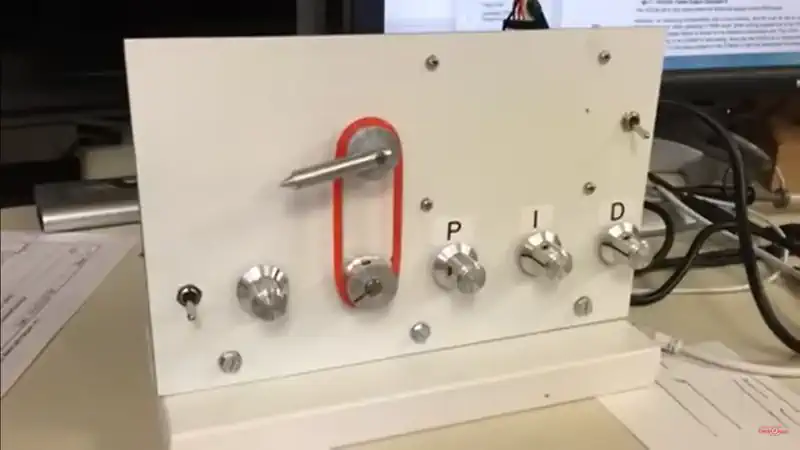
Here is a very nice demonstrative video of PID
How is PID Optimized?
PID optimization involves finding the best values for the P, I, and D parameters to achieve the desired system response. Common methods include:
- Manual Tuning: Operators manually adjust parameters based on observed system behavior.
- Ziegler-Nichols Method: A heuristic method of tuning PID controllers that attempts to produce good values for the three PID gain parameters.
- Cohen-Coon Method: Useful for processes with time delay, providing good disturbance rejection.
- Software Tools: Specialized software can simulate system behavior and suggest optimal PID values.
- Adaptive Tuning: The controller continuously adjusts its parameters based on the observed system dynamics.
Factors Influencing PID Performance
Several factors can influence PID performance:
- System Dynamics: Changes in the system being controlled can affect PID performance.
- Noise: Measurement noise can impact the effectiveness of the derivative term.
- Time Delays: Significant time delays in the system can make tuning difficult.
- Non-linearities: PID controllers are designed for linear systems, so non-linear behavior can pose challenges.
- Environmental Factors: Temperature, humidity, and other environmental factors can affect system behavior and thus PID performance.
Benefits of Optimizing PID on Runtime During Operations
Optimizing PID parameters during runtime, as in your Smart-PID project, offers several advantages:
- Adaptability: The system can adjust to changing conditions (like supply voltage or temperature) in real-time, maintaining optimal performance.
- Improved Efficiency: By continuously optimizing, the system can operate at peak efficiency, potentially saving energy and reducing wear.
- Robustness: The system becomes more robust to disturbances and changes in operating conditions.
- Reduced Manual Intervention: Automatic optimization reduces the need for manual retuning, saving time and labor.
- Enhanced Performance: Real-time optimization can lead to better overall system performance, with reduced overshooting, faster settling times, and improved stability.
- Extended Equipment Life: By maintaining optimal control, stress on the motor and other components can be reduced, potentially extending their operational life.
- Data-Driven Insights: The data collected during runtime optimization can provide valuable insights into system behavior and performance trends over time.
By implementing runtime PID optimization in your application, you're creating a more intelligent and responsive control system that can adapt to various factors affecting motor performance, ultimately leading to improved efficiency and reliability.